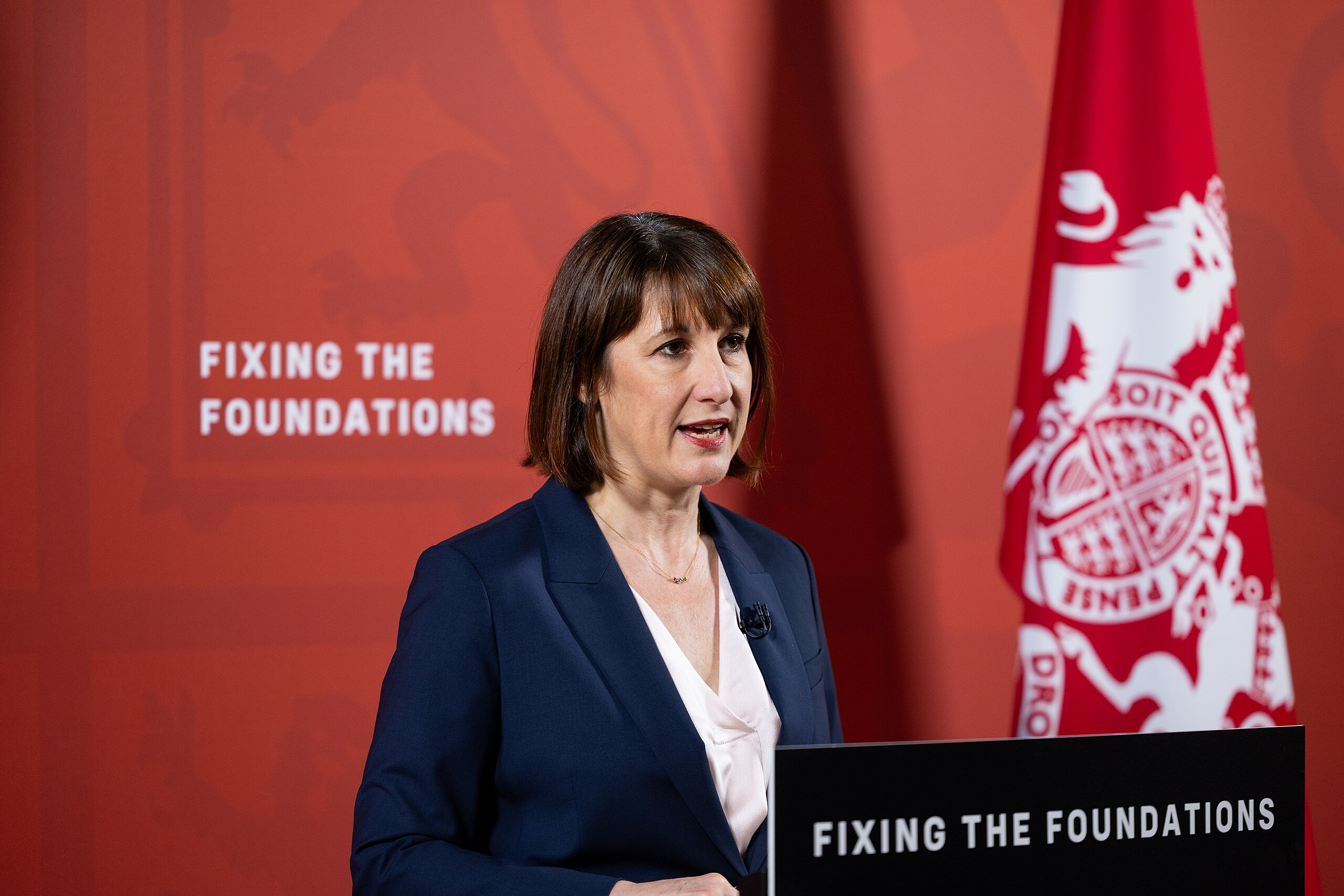

The United Kingdom’s Finance Minister, Rachel Jane Reeves, has formally stated that an upcoming budget will require both tax increases and spending reductions, directly attributing the necessity for fiscal tightening to the enduring economic impact of Brexit. This announcement signals a definitive governmental assessment that the structural effects of the nation’s withdrawal from the European Union (hereinafter: EU) constitute a major constraint on public finances. The decision to frame projected budgetary measures—including potential increases in revenue generation and reductions in public expenditure—within the context of post-separation economic performance constitutes a core political statement regarding the prevailing fiscal environment.
Attributing Fiscal Necessity to the Economic Impact of Brexit
Reeves announced that both tax increases and reductions in spending are under consideration for the forthcoming budget statement on 26 November. This prospective fiscal tightening is being presented as a necessary response to a growing deficit in the national public finances. Minister Reeves attributed the necessity for new fiscal measures partly to the continuing economic consequences of the United Kingdom’s departure from the European Union.
She asserted that the impact of Brexit is “severe and long-lasting” and that economists previously projected the United Kingdom’s economy would be four per cent smaller due to this process. The Minister cited the combination of past austerity policies, the withdrawal from the EU, and the effects of a previous government’s 2022 mini-budget as factors that have placed considerable strain on the economy of the nation.
Downgrade of Economic Forecasts and Fiscal Gap
The challenging fiscal context is being compounded by a projected downgrade of productivity forecasts by the independent Office for Budget Responsibility (hereinafter: OBR). Chancellor Reeves confirmed that the OBR has “consistently overestimated” the nation’s productivity performance in the past, especially after Brexit. This revision by the independent forecaster is anticipated to worsen the fiscal outlook, with experts projecting that the public finances may look 10£ billion to 20£ billion weaker over a five-year period than previously estimated in March.
The government is facing a gap in its public finances estimated to be around 50£ billion by some economic analysts. This figure accounts for the lower productivity forecasts, high costs associated with government debt and a prior reversal of proposed cuts to the welfare budget and winter fuel payments.
Strategy for Fiscal Discipline and Growth
In addressing the financial shortfall, Reeves stressed the need for fiscal discipline to ensure that the “numbers will always add up”. She explicitly contrasted this approach with the loss of control over public finances that, she stated, had previously caused inflation and interest rates to increase sharply. She further suggested that new taxes on wealthy citizens will be “part of the story” to raise revenue, though she ruled out introducing a new “wealth tax”.
Reeves’ stated priority for the government remains achieving sustained economic growth, which she deems the only permanent solution for generating sufficient tax revenues to permit investment in public services while maintaining lower taxes. To facilitate growth, the government is seeking to fast-track major infrastructure projects and enact reforms to the planning system. She also mentioned efforts to mitigate some of the negative effects of the EU withdrawal through new arrangements on food, farming, youth mobility and energy trading, emphasising the priority of forging deeper trade relationships, particularly with the EU.
Concluding Forecast
The explicit linkage by the Finance Minister between the ongoing economic impact of Brexit and the requirement for increased fiscal constraint constitutes a significant strategic articulation regarding the government’s operational scope. This communication functions as a structural framing, establishing the lasting consequences of the nation’s withdrawal from the European Union as a non-negotiable determinant of current fiscal policy, shifting the discourse from a reactive management of economic cycles to a foundational reassessment of national capacity.
The primary institutional implication of this articulation is the political entrenchment of the Office for Budget Responsibility’s revised, conservative productivity forecasts as the key metric for future governmental expenditure. By publicly connecting the necessity for tax increases and spending reductions to these independent economic reassessments – which reflect the post-Brexit economic configuration – the government establishes a mechanism for deflecting political liability for unpopular fiscal choices. This manoeuvre essentially defines the prevailing financial situation not as a deficit in political will, but as a mandatory structural accommodation to a revised, less productive economic potential.
Consequently, the government’s economic programme will pivot towards specific, targeted supply-side interventions and simplified European Union trade arrangements aimed at incrementally challenging the established OBR baseline. This pragmatic policy orientation indicates a long-term adjustment toward a post-separation economic model, seeking to leverage domestic efficiency and targeted trade to regain structural competitiveness.