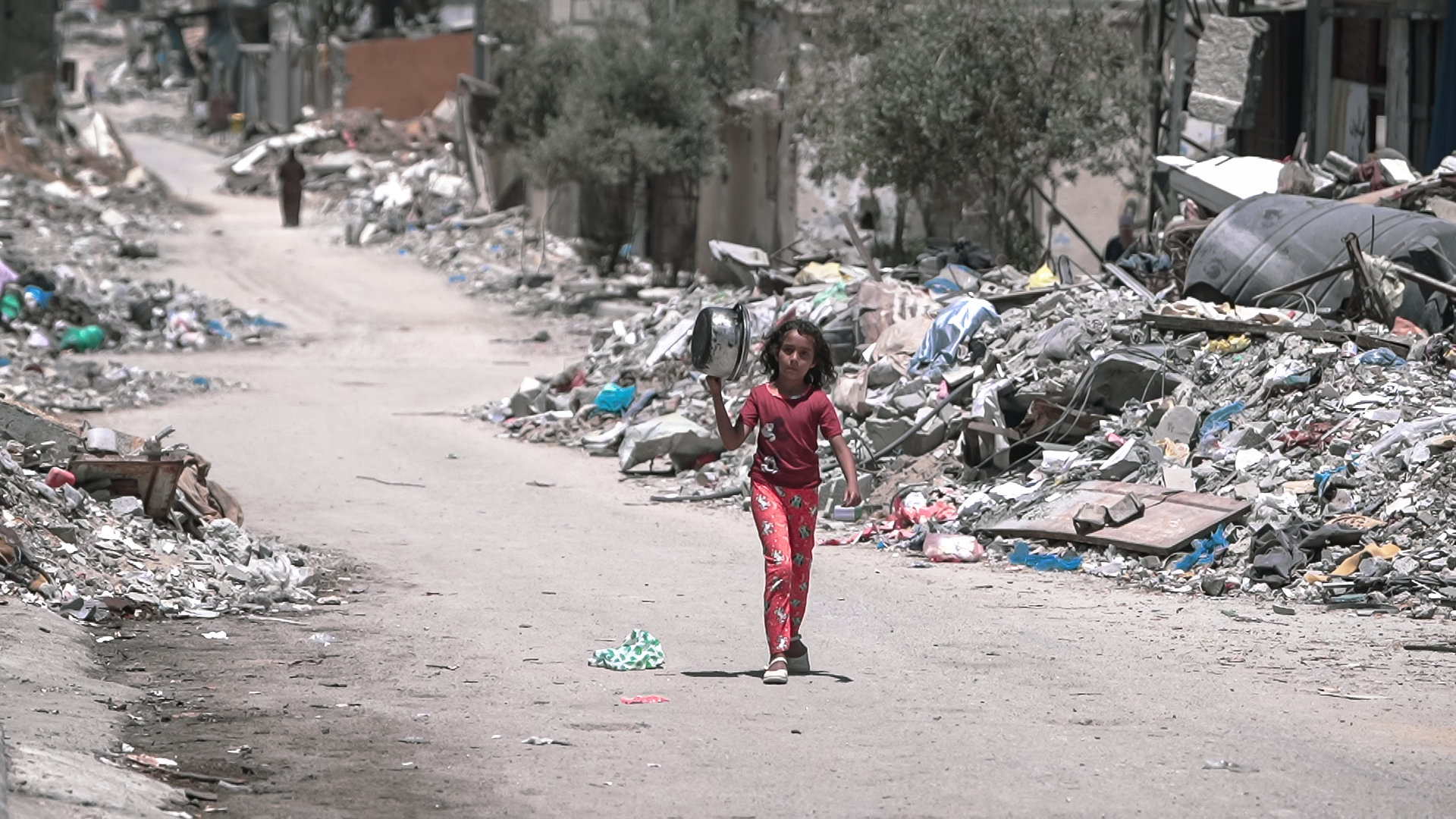

On 10 October 2025, a Ceasefire between the State of Israel and Hamas officially took effect, marking the implementation of the first phase of a United States of America (hereinafter: USA) brokered twenty-point peace plan. This development, achieved through intensive indirect negotiations in the Arab Republic of Egypt, mediated by the State of Qatar and the Republic of Türkiye, establishes a temporary cessation of hostilities. The initial phase is fundamentally an exchange mechanism, predicated on the release of Israeli and Palestinian hostages. This moment of de-escalation facilitates the withdrawal of Israeli forces from some areas of the Gaza Strip and coordinates a substantial increase in humanitarian aid. The subsequent phases of the comprehensive plan, however, confront contentious political and institutional obstacles, notably the long-term governance of the Gaza Strip and the mandatory disarmament of Hamas.
Phase One of Gaza Ceasefire Initiated
The first phase of the agreement centres on a mutual exchange involving the release of captives. The deal mandates the release of approximately twenty remaining living Israeli hostages held by Hamas in the Gaza Strip. In exchange, Israel will release hundreds of Palestinian hostages. This hostage swap is meant to occur within seventy-two hours of the agreement’s implementation. Concurrent with the Ceasefire and exchange, Israeli forces have partly withdrawn from certain parts of the Gaza Strip to pre-designated lines. This withdrawal is a preliminary step towards a wider disengagement process.
The halt in fighting is intended to facilitate a substantial surge of humanitarian aid into the Gaza Strip. The United Nations (hereinafter: UN) has positioned approximately one hundred and seventy thousand metric tonnes of essential supplies, including food and medicine, ready to enter the territory. UN officials are seeking an immediate authorisation from the Israeli government to significantly increase daily truck deliveries. The UN aims to restore critical infrastructure, including the water grid, and increase aid provision for the two million people requiring food assistance. The USA is also deploying approximately two hundred troops to Israel to assist in monitoring the Ceasefire and facilitating the flow of humanitarian and logistical aid, though these forces will not enter the Gaza Strip.
Leaders from European and neo-European states, specifically the Republic of France, the Federal Republic of Germany and the United Kingdom, publicly supported the efforts to achieve the initial Ceasefire. They also acknowledged the efforts of the mediators, Egypt, Qatar and Türkiye, underscoring the necessity for all parties to implement their obligations fully and without delay.
Concluding Forecast
The activation of Phase One of the ceasefire plan marks a technical cessation of hostilities, yet it immediately shifts the primary political challenge from military engagement to structural conflict resolution. The stability of the current Ceasefire hinges entirely on the forthcoming Phase Two, which is intended to address the complete disarmament of Hamas and the future governance of the Gaza Strip. These two objectives constitute a zero-sum political dynamic, making a sustainable transition highly complex.
One challenging aspect is the irreconcilable difference in demands concerning the long-term security architecture. The Israeli government insists on the complete and verifiable disarmament of Hamas, perceiving any residual military capacity as a sustained threat to Israel’s security. Conversely, Hamas has signalled no commitment to complete disarmament, with some elements asserting that they will not disarm until the full establishment of a Palestinian state. This fundamental conflict over the retention of military capabilities positions the Phase Two negotiations as a profound diplomatic impasse. Furthermore, the plan’s vision for a transitional governance structure, overseen by Palestinian technocrats and international entities, faces immediate hurdles in implementation. The Palestinian Authority currently lacks the necessary capacity and popular legitimacy to assume immediate control, and the absence of a unified, credible and non-factional Palestinian governing body in the Gaza Strip risks creating a security vacuum. Without a shared, clearly defined, and mutually acceptable mechanism for security guarantees and political control, the risk of a future relapse into conflict remains structurally high.