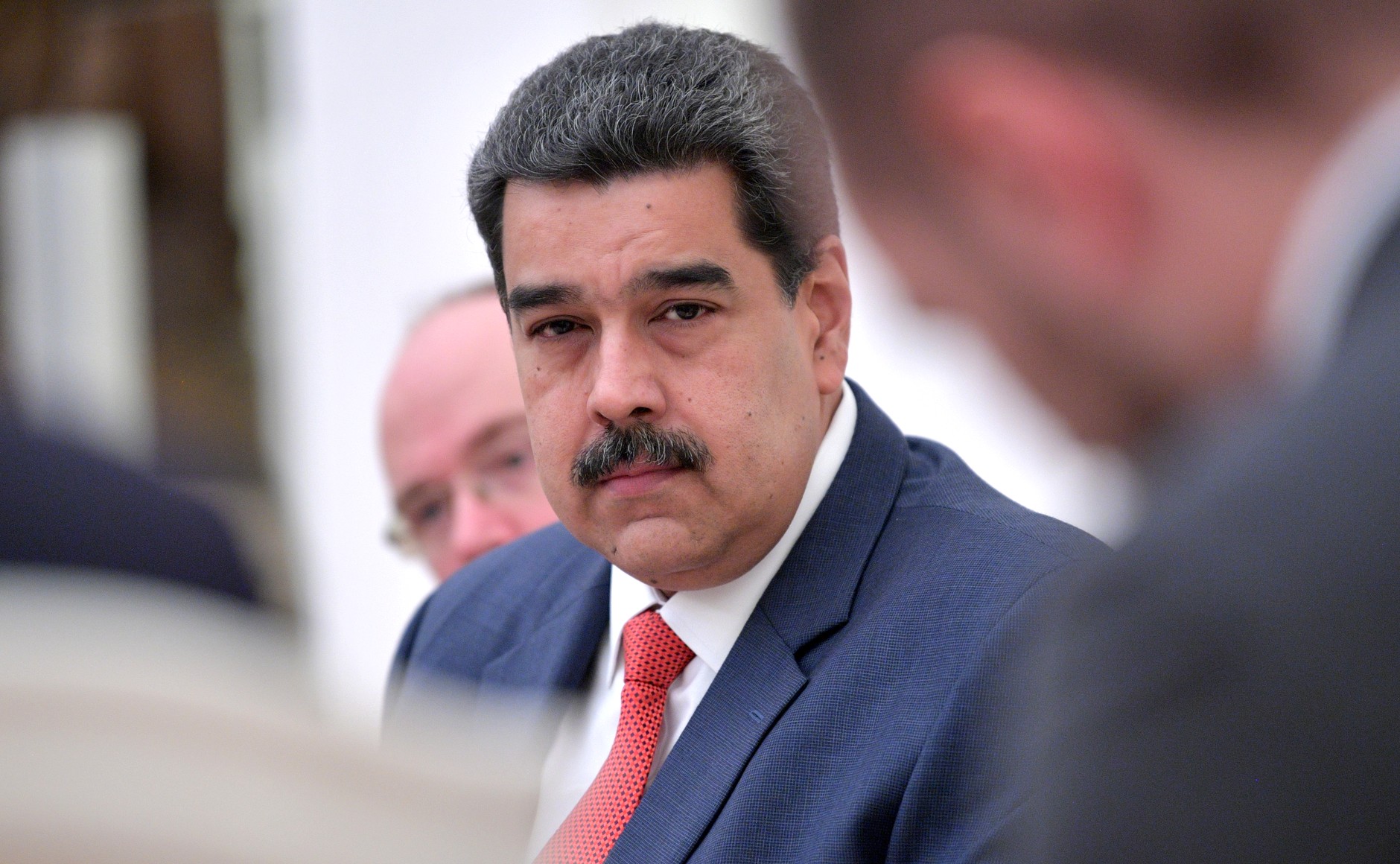

Venezuelan President Nicolás Maduro Moros has stated his readiness to declare a constitutional Venezuela state of emergency, formally known as a State of External Commotion, granting the executive special security powers. This move is presented as a necessary response to escalating aggression by the United States of America (hereinafter: USA). The current situation, marked by an increased naval deployment by the USA near Venezuelan waters and a series of lethal USA military strikes against Venezuelan boats in the Caribbean that allegedly carried drugs, introduces a critical variable into the constitutional and security dynamics of the region. The activation of exceptional legal frameworks by a state in response to external military threats is an important tool in the management of sovereign space and institutional stability, with potential implications for regional geopolitics.
Maduro Signals Readiness to Invoke Constitutional Emergency Powers
On 29 September 2025, the President of the Bolivarian Republic of Venezuela, Nicolás Maduro Moros, announced that his government is prepared to implement constitutional measures to confront external military actions. This readiness stems from the government’s interpretation of recent events as a direct threat to the sovereignty and security of the nation. President Nicolás Maduro Moros indicated that the Venezuelan government is preparing an emergency decree to enact a State of External Commotion. This specific constitutional condition, outlined in the Venezuelan Constitution, is one of the “States of Exception” that can be activated to provide the state with legal tools to confront situations of external aggression.
The measure is being considered to ensure stability, the exercise of sovereignty and national unity in the face of possible military threats. Vice President Delcy Rodríguez specified that if USA military forces proceed with attacks, the decree would immediately empower the President to mobilise the armed forces, seal the state’s borders and place the military in charge of essential infrastructure and key strategic interests. Furthermore, the decree would permit the government to activate economic plans to ensure national life and the full functioning of public institutions. Under the Constitution, the State of External Commotion does not interrupt the functioning of public powers and may be effective for up to 90 days, with the possibility of extension for an equal period, subject to approval by the National Assembly. The decree must be submitted to the National Assembly for consideration and approval, and to the Constitutional Chamber of the Supreme Court of Justice for review within eight days of promulgation.
USA Military Activities and Diplomatic Reactions
The escalation comes in the wake of significant USA military activities in the Caribbean Sea. The USA has deployed a major naval presence near Venezuelan waters, which constitutes an aggressive military posturing. Recent USA military actions have included lethal strikes on vessels the USA claims are carrying narcotics from the Bolivarian Republic of Venezuela. These strikes have resulted in fatalities and are part of a broader USA military campaign against alleged drug trafficking in the region. Caracas views these unlawful strikes as part of a dangerous escalation designed to destabilise the sovereign nation and a potential prelude to a broader military intervention.
The Venezuelan government has denounced the USA military buildup, with Vice President Delcy Rodríguez stating that it constitutes a violation of the Charter of the United Nations (hereinafter: UN). She explicitly warned of catastrophic consequences should a military onslaught materialise. Additionally, the government has warned that any citizen, whether domestic or foreign, who openly promotes or justifies external military aggression would face prosecution under national law. Venezuela has urged the Community of South American and Caribbean States to adopt a unified position against what it terms as external aggressions in the region.
Concluding Outlook
The indication by the government of the Bolivarian Republic of Venezuela of its readiness to declare a State of External Commotion projects two critical, interconnected scenarios for regional political stability and domestic governance. The first scenario is a rapid, defensive consolidation of executive power. The formal declaration would provide the President with a structured, constitutional framework to manage a state of conflict, essentially granting exceptional powers to circumvent ordinary bureaucratic or legislative processes for a defined period. This institutional action is likely to be paired with an intensified communication strategy focused on national resistance against foreign intervention, aiming to solidify internal political support. The core challenge in this scenario remains the balancing of enhanced executive authority against the constitutional requirement for judicial and legislative oversight to prevent misuse of the enhanced authority.
The second, more consequential scenario is the sustained elevation of the tension into a broader geopolitical confrontation in South America. The USA’s current military approach, framed as counter-narcotics operations, risks being perceived and countered as a military entanglement, potentially drawing in state actors who maintain commercial and strategic interests in Venezuela’s resource sector. Potential implications are that the State of External Commotion might inform other states that suffer from diplomatic pressure by the USA to adopt similar measures to react more directly to the threats from Washington. Dependent on the reaction of the USA, the military tensions in the region might expand to a multi-lateral diplomatic conflict that leads to economic sanctions and further military maneuvers. In any case, the probability of an outright military confrontation is very low.