
The three countries mediating the Gaza ceasefire — the Republic of Türkiye, the Arab Republic of Egypt and the State of Qatar — issued a joint statement on 3 August 2026 condemning what they described as ongoing Israeli violations of the ceasefire agreement, including attacks on healthcare facilities and civilian infrastructure. Jordan endorsed the statement the following day. Simultaneously, Israeli Prime Minister Benjamin Netanyahu publicly rejected central provisions of a United States of America-backed deal, stating that Israel would not withdraw from Gaza until Hamas had completely disarmed. In Rome, delegations from Lebanon and Israel opened a seventh round of direct negotiations on the implementation of a separate framework agreement covering Israeli withdrawal from Lebanese territory.
Mediator Joint Statement On Gaza Ceasefire Violations
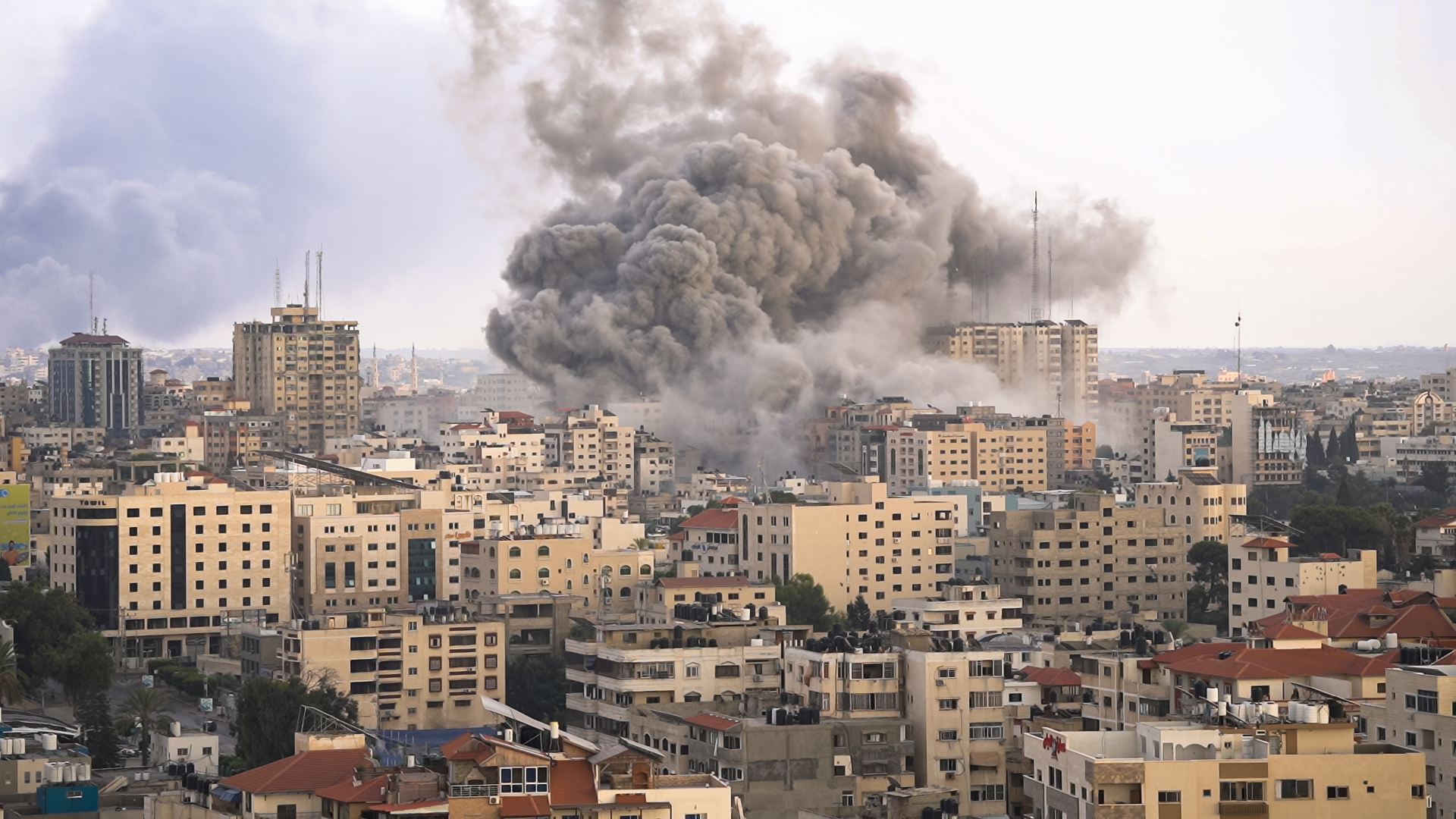
The foreign ministries of Türkiye, Egypt and Qatar released the joint statement in their formal capacity as mediating states, expressing what they termed a strong condemnation and denunciation of the ongoing Israeli violations in the Gaza Strip (Türkiye Ministry of Foreign Affairs). The statement identified attacks on medical facilities and healthcare infrastructure as constituting flagrant violations of international humanitarian law. The three governments called on Israel to comply with its ceasefire obligations and to uphold the terms of the truce agreement. The statement further warned that continued violations threaten to derail ceasefire implementation efforts and risk further civilian casualties (Yeni Şafak).
The joint communiqué specifically highlighted attacks targeting healthcare facilities and medical infrastructure as a breach of international humanitarian law as a systemic pattern rather than isolated incidents. The mediators called for an immediate halt to such attacks and for unhindered humanitarian access to the Gaza Strip. The statement did not specify a deadline or enumerate particular incidents, but its issuance by all three mediating governments simultaneously gave it formal diplomatic weight beyond that of any single state’s protest. The Türkiye Ministry of Foreign Affairs published the full text on its official website on 3 August 2026.
Jordan’s Endorsement
On 4 August 2026, Jordan formally endorsed the mediators’ joint statement, adding Amman’s voice to the condemnation of Israeli actions in Gaza. Jordan’s position aligned with the mediators’ call for an immediate halt to attacks on health facilities and for unhindered humanitarian access. Jordanian officials stated that continued Israeli violations undermine the ceasefire agreement and threaten efforts to reduce tensions in Gaza (TRT World). Jordan is not a formal party to the mediation framework but has maintained a direct interest in Gaza affairs through its role as custodian of Islamic holy sites in Jerusalem and through the volume of humanitarian transit across its territory.
Netanyahu Rejects Gaza Withdrawal Terms
Israeli Prime Minister Benjamin Netanyahu on Monday told the United States of America (hereinafter: USA) envoy for Gaza, operating under the Board of Peace framework, that Israel would not withdraw from the Gaza Strip or cease fire under any agreement, rejecting central provisions of the North American President’s proposed roadmap for ending the war (Yeni Şafak). Netanyahu’s position, as reported, was that Israel would not withdraw from Gaza until Hamas had been completely disarmed, a condition that the USA have been working to address through its ceasefire diplomacy (Euronews). The rejection came despite Washington’s active efforts to advance a ceasefire and represented a direct challenge to the diplomatic framework the USA have been promoting.
Netanyahu’s stated precondition, a full Hamas disarmament before any Israeli withdrawal, places a significant procedural obstacle before the deal. The USA have not publicly responded to the rejection in the sources available. Netanyahu’s position also stands in direct tension with the mediating states’ joint statement, which calls on Israel to comply with existing ceasefire obligations, implying that a ceasefire framework is already operative and being violated rather than still under negotiation. The divergence between Israel’s stated preconditions and the mediators’ characterisation of the situation as one of ongoing violations reflects the contested status of the ceasefire’s legal and operational standing.
Lebanon-Israel Talks: Seventh Round In Rome
On 4 August 2026, delegations from Lebanon and Israel opened a seventh round of direct negotiations in Rome (Yeni Şafak). The talks concern the implementation of a framework agreement signed in June 2026, which provides for Israeli withdrawal from occupied Lebanese territories and the deployment of Lebanese armed forces in those areas. The Rome format has now hosted seven consecutive rounds, indicating a sustained, structured negotiating process distinct from the Gaza track.
During this round, Lebanon presented its border position and discussed verification mechanisms for Israeli withdrawal and the disarmament of Hezbollah. The talks also addressed the question of Hezbollah disarming, which Euronews reported as a central agenda item, noting that Hezbollah drew Lebanon into the broader regional conflict in March when it launched rocket fire at Israel in support of Iran. The seventh round represents the continuation of a negotiating track that has proceeded in parallel with, and largely separately from, the Gaza ceasefire diplomacy, though both involve USA mediation and Israeli military posture as central variables.
Diplomatic Landscape And Immediate Outlook
The events of 3–4 August 2026 present two distinct but interrelated diplomatic tracks. In the Gaza track, the mediating states have formally placed Israel on notice over ceasefire violations, with Jordan’s endorsement broadening the coalition of states aligned with that position. Netanyahu’s public rejection of withdrawal terms, however, signals that Israel does not accept the mediators’ characterisation of the situation as one requiring immediate compliance. The gap between the mediators’ legal framing, the violations of an existing agreement, and Israel’s political framing of unmet preconditions remains unresolved, with no stated mechanism for resolution in the available sources.
In the Lebanon track, the Rome process has reached a seventh round, suggesting incremental progress on implementation details, including border demarcation, verification and Hezbollah disarmament. The June 2026 framework agreement provides a legal basis for the talks that the Gaza track currently lacks in comparable clarity. Whether progress in Rome can be insulated from the deteriorating diplomatic atmosphere over Gaza, or whether Netanyahu’s stated position on Gaza withdrawal will affect Israeli flexibility on the Lebanese withdrawal schedule, are questions that the available sources do not resolve.
Success in achieving peace in the region is heavily dependent on the voluntary commitment of Israel, which has shown little to no commitment to past ceasefires and peace agreements. As the USA, Israel’s vassal state, is heavily involved in both tracks, while the counterparts of Lebanon and Palestine are left without significant diplomatic support, the outcomes point to unfavourable situations for the attacked societies. Therefore, it is all the more important that other international actors get involved quickly and leverage Israeli and USA dependencies.
Of course, interests play an important role here. First and foremost, actors like Iran and Türkiye must push for a favourable solution for Lebanon and Palestine, in order to profit from the positive spillover effects of a lasting peace and following economic recovery.