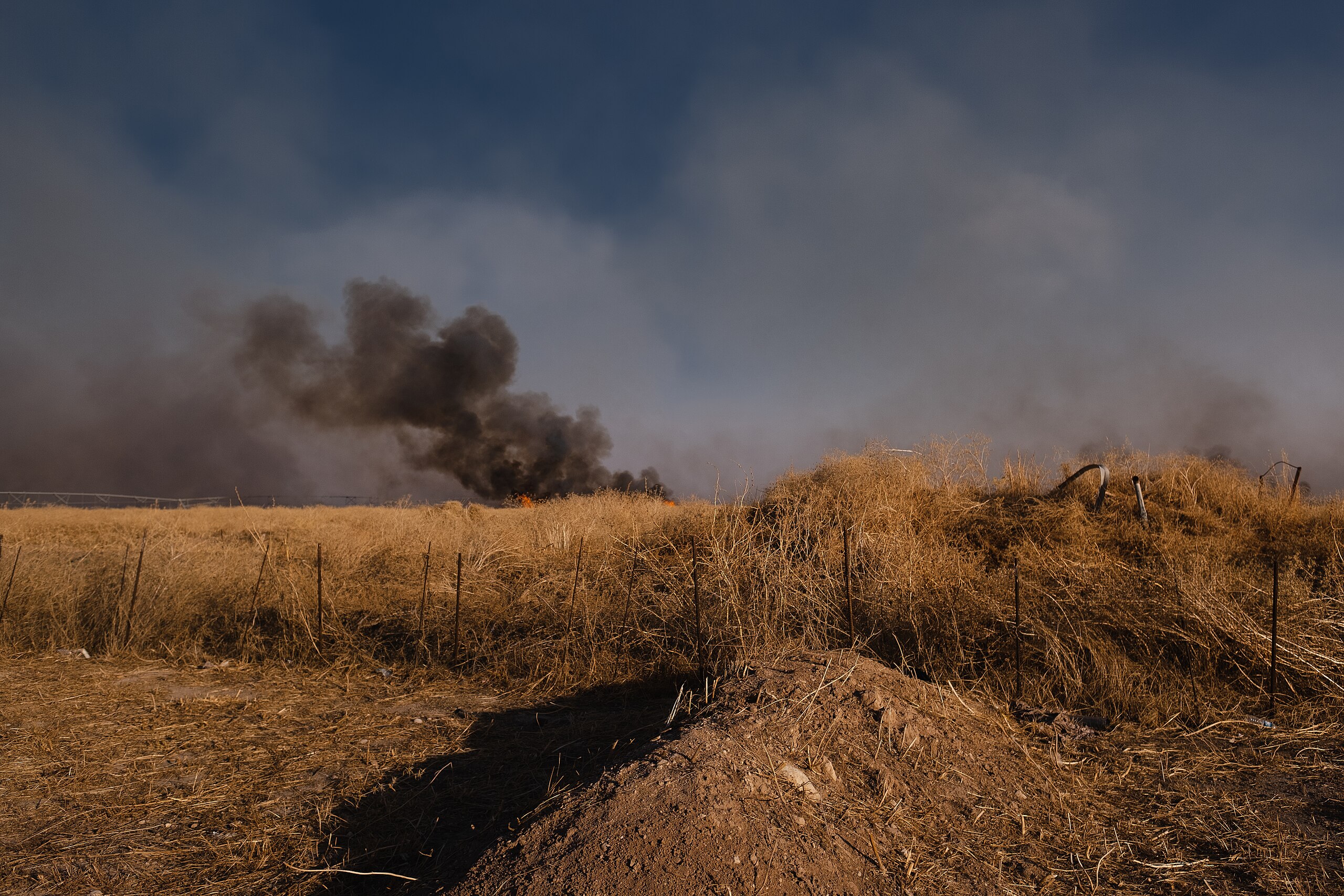

On 19 December 2025, the United States of America (hereinafter: USA) initiated a large-scale aerial campaign against the terror organsiation Islamic State (hereinafter: IS) targets across central Syria. The USA strikes in Syria were authorised in retaliation for an insider attack in Palmyra on 13 December 2025, which resulted in the deaths of two North American soldiers and one civilian interpreter. According to the Defence Ministry of the USA, the operation aimed to degrade the capabilities of IS militants and destroy their infrastructure in the region.
Operational Scope of US Strikes in Syria
The military operation involved a coordinated series of airstrikes and artillery barrages targeting over 70 distinct locations associated with IS. According to Al-Monitor, the strikes commenced in the late hours of Friday and targeted weapons storage facilities, command centres and militant hideouts across rural central and eastern Syria. Specific locations hit included areas in the Deir ez-Zor and Raqqa provinces, as well as the Jabal al-Amour region near Palmyra.
The Defence Ministry of the USA deployed a significant array of aerial and ground assets to execute the mission. As reported by Anewz and Al Jazeera, the operation utilised F-15 Eagle fighter jets, A-10 Thunderbolt ground-attack aircraft and AH-64 Apache helicopters. Additionally, High Mobility Artillery Rocket Systems (hereinafter: HIMARS) were employed to strike targets from the ground. Al-Monitor notes that the Royal Jordanian Air Force also participated in the operation, with F-16 fighter jets supporting the bombardment.
Casus Belli: The Palmyra Ambush
The airstrikes were a direct response to a lethal incident that occurred one week prior. On 13 December 2025, a convoy of forces from the USA and Syria was ambushed in the city of Palmyra. According to Al Jazeera, the attack resulted in the deaths of two members of the Iowa National Guard and a civilian interpreter. The fallen personnel were identified as Sergeant Edgar Brian Torres-Tovar and Sergeant William Nathaniel Howard, alongside interpreter Ayad Mansoor Sakat.
Preliminary investigations cited by Al-Monitor indicate that the perpetrator was a “lone gunman” and a recruit within the Syrian security forces who was suspected of harbouring extremist sympathies aligned with IS. The attacker was killed at the scene. While IS did not initially claim direct responsibility for the ambush, the Central Command of the USA (hereinafter: CENTCOM) attributed the attack to the group, prompting the swift retaliatory measures.
Political and Strategic Context
The response from Washington was further utilised as a public diplomacy campaign. The Defence Minister described the operation as a “declaration of vengeance” rather than the start of a new war, stating that the USA would “hunt and kill” those who target North American citizens. The President, in a statement on social media, confirmed the authorisation of the strikes, warning of “very serious retaliation” for the killing of personnel.
Significantly, the operation highlights a shifting geopolitical dynamic in Sub-Anatolia. According to Al Jazeera, the government of Syria, led by President Ahmed al-Sharaa, following the political transitions of late 2024, expressed full support for the military action taken by the USA, signalling a cooperative security arrangement between Washington and Damascus. The Syrian Foreign Ministry reiterated its commitment to eliminating IS safe havens within its territory and intensifying operations against the group.
Concluding Outlook
The execution of the strikes against the terror organisation suggests a consolidation of the security partnership between the Syrian and North American governments. By coordinating military actions and publicly aligning on counter-terrorism objectives, both states are likely to establish stronger ties that could have spillover effects on other areas as well. This is stressed by the USA’s recently formulated plan to establish a military base in Damascus.
Traditionally, foreign military involvement in destabilised states, such as Syria, means incremental political control by the foreign power. Therefore, these strikes may be more than they appear to be. Under the legitimising factor of counter-terrorism and joint cooperation, the return of North Americans to Syria could mean an expansion of Israel’s influence in the Sub-Anatolian nation, as Israel is the USA’s closest ally with aligned foreign policy goals. Increased cooperation with the USA today could mean territorial concessions for Syria in the south tomorrow.