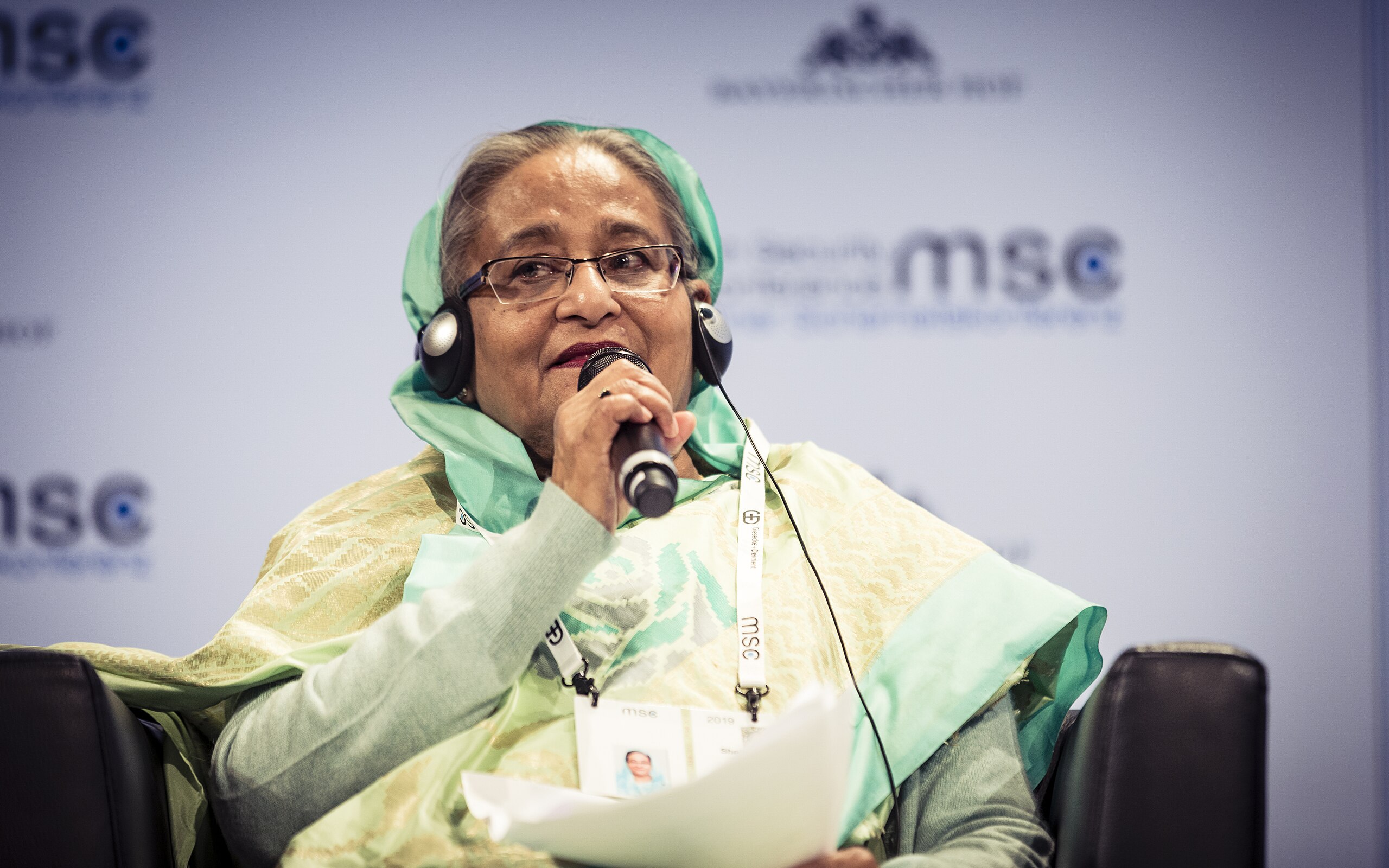

The International Crimes Tribunal-1 (ICT-1) in Dhaka has sentenced former Prime Minister Sheikh Hasina to death for crimes against humanity committed during the uprising of July and August 2024. The verdict, delivered on Monday, 17 November 2025, also imposed capital punishment on the former Minister of Internal Affairs, Asaduzzaman Khan Kamal, while security forces across the nation remained on high alert. The judgment marks a significant legal development in the accountability process for the violence that preceded the fall of the Awami League government.
Tribunal Judgment and Sentences
The three-member tribunal, led by Justice Md. Golam Mortuza Mozumder, found Sheikh Hasina guilty of ordering a crackdown on student-led protests involving the use of lethal force. The court ruled that the former head of government bore command responsibility for the “genocide” and crimes against humanity committed during the unrest.
According to the 453-page summary of the verdict, the charges included delivering inciting speeches and authorising the deployment of drones, helicopters and lethal weapons against demonstrators. The tribunal specifically cited the shooting of Abu Said, a student at Begum Rokeya University, and the deaths of protesters in the Chankharpul area of the capital as evidence of the state’s actions.
Alongside Sheikh Hasina, the tribunal sentenced former Home Minister Asaduzzaman Khan Kamal to death by hanging. Both individuals were tried in absentia as they remain fugitives. In contrast, the former Inspector General of Police (hereinafter: IGP), Chowdhury Abdullah Al-Mamun, received a five-year prison sentence. The former police chief had turned state witness (approver), admitting his involvement and testifying against the political leadership.
Security Measures and Unrest
Authorities implemented stringent security protocols across Dhaka and other sensitive districts in anticipation of the judgment. A significant contingent of Border Guard Bangladesh (hereinafter: BGB) personnel was deployed in Gopalganj, a region traditionally supportive of the Awami League.
Despite these measures, sporadic incidents were reported. Law enforcement agencies utilised tear gas and batons to disperse protesters gathered near the demolished residence of Sheikh Mujibur Rahman, the father of the former Prime Minister, in Dhaka. Police officials stated that sound grenades were employed to control the crowds in the area.
Additionally, reports indicated that “cocktail” explosions occurred in central Dhaka, prompting the Dhaka Metropolitan Police Commissioner, Mohammad Sajjat Ali, to order a “shoot-at-sight” policy for arsonists attempting to disrupt public order. The unrest followed a call by the Awami League for a nationwide lockdown to protest the trial proceedings.
Political and Diplomatic Reactions
Sheikh Hasina, currently residing in India, rejected the verdict through a statement, describing the proceedings as “biased and politically motivated”. She characterised the tribunal as rigged and asserted that the interim government lacks a democratic mandate. Sajeeb Wazed, the son of the former Prime Minister, stated that his mother remains safe in India and threatened to block the general elections scheduled for February 2026, citing the ban placed on the Awami League.
Conversely, families of the victims expressed partial satisfaction with the outcome. Snigdha, the brother of a casualty named Mugdho, stated that while the death sentence was necessary, the execution of the punishment on Bangladeshi soil remains the priority.
The judgment has immediate diplomatic implications. Following the verdict, the Foreign Ministry of Bangladesh officially urged the Indian government to extradite Sheikh Hasina and Asaduzzaman Khan Kamal to face the execution of their sentences.
Concluding Outlook
The capital sentence delivered by the International Crimes Tribunal formally establishes a legal mandate for the interim government to pursue the extradition of the former Prime Minister. This development is likely to place substantial strain on the diplomatic relationship between Dhaka and New Delhi, as the refusal to comply with the extradition request could be viewed by the Bangladeshi state as an obstruction of justice. The focus of the administration is expected to shift towards the legal and diplomatic channels necessary to secure the return of the convicted individuals.
In the international context, this verdict resembles recent rulings on other former political figures in the Democratic Republic of Congo and Uganda. These developments underline the importance of pursuing violent leaders of movements or even Heads of Government. Also, it shows how the socio-political development of nations also improves the development of judicial structures. However, it should be noted that verdicts like this are also prone to politicisation, creating the risk of wrongful punishment based on political motives.