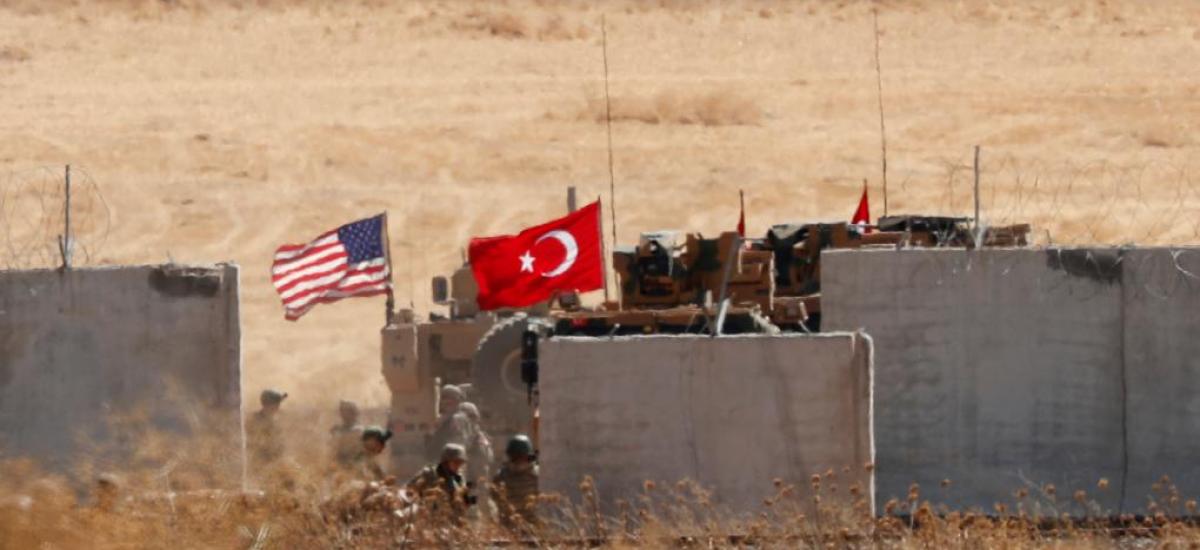

Energy relations between allied states are rarely confined to economic calculations. They are mechanisms of strategic alignment, enabling or constraining broader patterns of cooperation in defence and diplomacy. The formalisation of a new energy deal between the Republic of Türkiye and the United States of America (hereinafter: the USA) illustrates this dynamic. While formally commercial, the agreements mark a recalibration of Ankara’s long-term security architecture, simultaneously diversifying its energy supply and reinforcing structural links to Washington. This recalibration cannot be read merely as a trade matter. In international politics, energy dependency shapes strategic autonomy, and energy diversification creates new leverage in foreign policy. In Türkiye’s case, reducing reliance on Russian pipeline gas through long-term contracts with the USA and investing in next-generation civilian nuclear technology are moves that directly interact with its defence relations inside and outside the North Atlantic Treaty Organization (hereinafter: NATO).
Formalisation of Long-Term Commitments
During high-level discussions on the sidelines of the United Nations General Assembly, Türkiye and the United States of America formalised two principal agreements in the energy field. The first agreement is a 20-year contract for the supply of Liquid Natural Gas (hereinafter: LNG) from the USA to Türkiye. The contract establishes a long-term arrangement between the two states, providing a stable framework for LNG deliveries over two decades.
The second agreement concerns advanced civilian nuclear cooperation. The Turkish Minister of Energy and Natural Resources confirmed that the framework is centred on Small Modular Reactor (hereinafter: SMR) technology. SMRs represent a flexible approach to low-carbon electricity generation, distinguished by modular design, scalability and reduced infrastructure requirements compared with traditional large-scale reactors.
As The National Interest highlighted, this cooperation is not only an energy security initiative but also a signal of Ankara’s willingness to embed itself within the technological partnerships of its NATO ally. For Washington, extending cooperation in nuclear technology strengthens strategic ties beyond conventional defence instruments, creating new domains of interdependence that are less vulnerable to immediate political dispute.
Defence Relations: Compartmentalisation and Constraint
The trajectory of bilateral defence ties remains conditioned by unresolved disputes. Ankara continues to seek the modernisation of its air fleet, most notably through the acquisition of F-16 fighter jets and renewed discussions surrounding the F-35 programme. These efforts are complicated by the Countering America’s Adversaries Through Sanctions Act (hereinafter: CAATSA), imposed following Türkiye’s procurement of the Russian S-400 air defence system. The sanctions restrict high-end defence cooperation and remain formally in place.
Nonetheless, both governments have chosen a compartmentalised approach. As Anadolu Agency reported, the new energy and nuclear agreements were deliberately insulated from these military disputes. This suggests an attempt to construct a stabilising economic-technical foundation for the alliance, even while defence cooperation is managed cautiously and with political restraint.
Strategic Analysis: Recalibration through Non-Traditional Security Domains
The Türkiye–USA energy deal should be read as a structural attempt to reinforce bilateral relations through domains that lie outside the direct sphere of political-military friction. By embedding a 20-year LNG supply commitment and advancing nuclear cooperation, Ankara and Washington are creating institutional interdependence that serves two functions:
- Resilience against external energy leverage. By diversifying away from Russian pipeline gas, Türkiye strengthens its autonomy in foreign policy while simultaneously reducing vulnerabilities that could undermine NATO cohesion.
- Reinforcement of alliance credibility. For Washington, the agreements demonstrate a commitment to Ankara’s long-term security and development, even while CAATSA sanctions formally constrain the defence portfolio. This duality illustrates that alliances can be sustained by broadening cooperation beyond weapon systems to include economic and technological dimensions.
The broader implication is that bilateral defence ties are no longer exclusively determined by arms transfers or military exercises. Instead, structural interdependence in energy and advanced civilian technologies can provide a stabilising function, ensuring that disputes in one domain do not paralyse the entire alliance. This approach reflects a pragmatic recognition of the complexity of modern security, where economic resilience and technological partnerships can be as decisive as traditional military platforms.