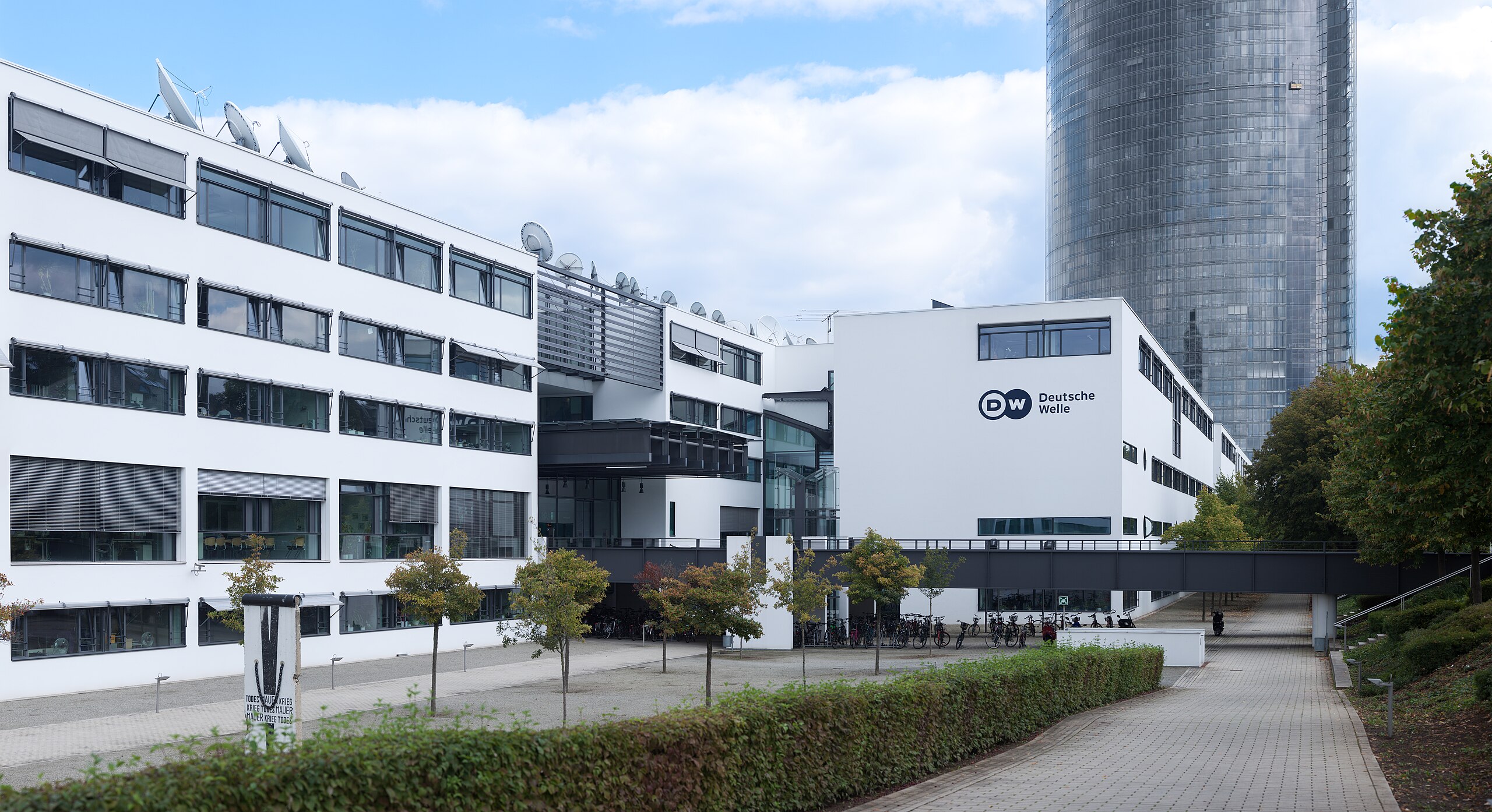

The Justice Ministry of the Russian Federation officially designated the German state-owned broadcaster Deutsche Welle (hereinafter: DW) as an “undesirable organisation” on 16 December 2025. This administrative decision, reported by Deutsche Welle and Reuters, effectively bans the broadcaster’s operations within the territory of the Russian Federation and criminalises any association with the outlet for Russian citizens. The move marks a significant escalation in the diplomatic and media relations between the Russian Federation and the Federal Republic of Germany.
The Administrative Designation
The decision was formalised by the Justice Ministry of the Russian Federation, which updated its registry of foreign and international non-governmental organisations whose activities are deemed “undesirable” on Russian territory. According to Reuters, the listing follows a request from the Prosecutor General’s Office, which determined that the broadcaster’s activities posed a threat to the constitutional order and security of the Russian Federation.
This designation represents the most severe legal restriction available against foreign entities under current Russian legislation. As reported by The Moscow Times, the status compels the organisation to cease all activities in Russia immediately. This includes the closure of any remaining bureaus, the freezing of assets held within Russian financial institutions and a prohibition on distributing information materials, including online content.
Legal Implications and Criminal Liability
The updated classification of Deutsche Welle carries extensive legal consequences for the broadcaster and, more critically, for related individuals residing within Russia. Deutsche Welle reports that under the Russian Criminal Code, directing or participating in the activities of such an undesirable organisation is a criminal offence.
The implications for Russian society are granular and severe. According to the legal analysis provided by The Moscow Times, the ban extends beyond the employees of the broadcaster. Any cooperation with DW, including providing commentary, sharing hyperlinks to its articles or reposting its content on social media platforms, may now be prosecuted.
Al Jazeera notes that penalties for violations can range from administrative fines to custodial sentences. Repeat offenders or those organising the activities of the entity could face imprisonment for up to six years. This creates a legal environment where the mere consumption and dissemination of Deutsche Welle content puts Russian citizens at risk of criminal prosecution.
Diplomatic and Institutional Reactions
The designation has elicited immediate responses from institutional actors in Berlin. According to Deutsche Welle, the broadcaster’s Director General condemned the move as an arbitrary political decision aimed at disconnecting the Russian population from independent information sources. The broadcaster affirmed its commitment to continue reporting on events in Russia from its headquarters in Germany and other European locations.
Reuters reports that the Foreign Office of the Federal Republic of Germany described the decision as a further strain on bilateral relations. The German government stated that the free exchange of information is a fundamental component of international relations and that this measure by the Russian government disproportionately targets media freedom.
Context of Media Regulations
This development occurs within a broader trajectory of tightening media regulations in the Russian Federation. As highlighted by Al Jazeera, Deutsche Welle had previously been designated as a “foreign agent,” a label that required the broadcaster to append disclaimers to its content and submit detailed financial audits to Russian authorities. The escalation to “undesirable” status removes the possibility of legal operation entirely.
The Moscow Times observes that this mechanism has been utilised with increasing frequency against European and neo-European states’ media outlets and non-governmental organisations. The legislation, originally introduced in 2015, can be perceived as an instrument for the state to control the information space and limit the influence of foreign actors within domestic Russian politics.
Concluding Outlook
The reclassification of Deutsche Welle as an “undesirable organisation” signals a finalisation of the informational decoupling between Russia and European state media structures. It is highly probable that the Russian government will continue to utilise this legal mechanism to exclude remaining foreign broadcasters to shield domestic media from foreign narratives. Consequently, the flow of information between Russia and European nations will likely become increasingly restricted.
What is problematic about this measure is not the technical content. Germany and its state-owned media channels are among the most advanced institutions in terms of psychological manipulation, creating devastating effects even at the domestic level. However, the ban (effectively) of the media outlet is a clumsy attempt to counteract foreign public diplomacy. Instead, the ban of Deutsche Welle in Russia creates more pressure on Russia, as it aids the already existent narrative of the oppressive political system that European and neo-European nations try to deepen.
Although Germany and other states, like the United Kingdom, rank much higher in suppressing undesired expressions of opinions, Russia’s reputation in that regard is much worse. This is exactly due to these direct and blunt attempts to control the flows of information. It is never the actor that controls the flows of information or decides the agenda that is more powerful in shaping public opinion. It is always the actor that makes its opponents as strong as possible and then is still one step ahead.