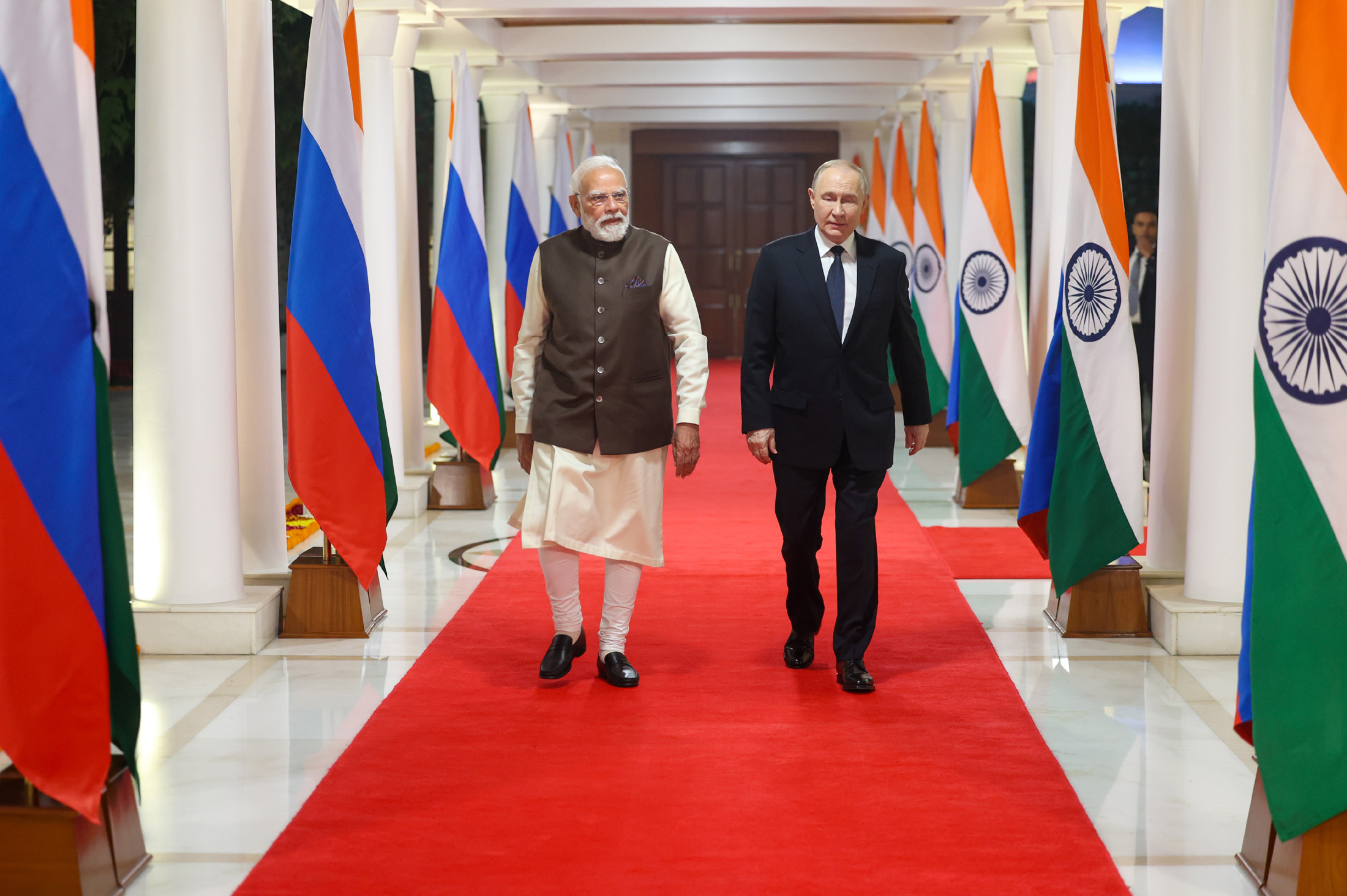

The Russian Federation is prepared to continue uninterrupted oil shipments of fuel to India, according to an assurance made by President Vladimir Putin to Prime Minister Narendra Modi on 5 December 2025. The statement followed the 23rd India-Russia Annual Summit in New Delhi, where the leaders affirmed their intent to strengthen the long-standing bilateral relationship across key sectors including energy, trade, and defence. The discussions were concluded with a joint statement emphasising that the ties between the two nations remain resilient to external pressure in the complex and uncertain geopolitical situation.
Energy Security and the Pledge for Uninterrupted Oil Shipments
Energy security was a major focus of the talks between President Putin and Prime Minister Modi. The Russian President stated that Russia is a reliable supplier of energy resources, including oil, gas and coal, which are necessary for the development of the Indian energy sector. He added that Russia is prepared to continue ensuring the uninterrupted supply of fuel for India’s rapidly growing economy. Prime Minister Modi, while not explicitly mentioning oil, acknowledged that energy security is a strong and important pillar of the India-Russia partnership.
India emerged as a major purchaser of Russian oil following the commencement of the conflict in Ukraine, providing an export market for Moscow as European and neo-European states reduced their purchases. In 2024, Russia supplied approximately 36 percent of India’s total crude imports, amounting to around 1,8 million barrels of discounted oil per day.
Recent developments saw the Indian government describe a 25 percent import tariff imposed by the United States of America (hereinafter: USA) in August as unreasonable and unjustified, an action Washington linked to India’s purchase of Russian oil. Officials in New Delhi stated that the government’s priority is to secure the energy needs of its population. The discussions between the two leaders also covered cooperation in civil nuclear energy, which has spanned decades, with continued collaboration planned in this area as well as in clean energy.
Economic and Trade Cooperation
The summit resulted in the finalisation of an economic cooperation programme until 2030, which aims to double trade between the two nations to 100$ billion per year by 2030. The programme is designed to diversify, balance, and sustain trade and investment. Bilateral trade between the two nations stood at 68,7$ billion in the last fiscal year ending in March.
Both leaders are pursuing the early conclusion of a free–trade agreement between India and the Eurasian Economic Union. Furthermore, they directed officials to intensify negotiations on an agreement for the promotion and protection of investments. The economic cooperation includes an emphasis on increasing India’s exports to Russia, strengthening industrial cooperation, and forging new technological and investment partnerships.
Specific agreements across various sectors were signed, including:
- Fertilisers: An agreement was signed between Indian entities — Rashtriya Chemicals and Fertilisers Limited, National Fertilisers Limited, and Indian Potash Limited — and Russia’s JSC UralChem, aimed at improving supply chains and long-term cooperation in the sector. This included an agreement for Indian firms to jointly set up a urea plant in Russia.
- Maritime Cooperation: Memoranda of Understanding (hereinafter: MoUs) were signed by India’s Ministry of Ports, Shipping and Waterways and Russia’s Ministry of Transport to boost cooperation, capacity building, and training for operating ships in polar waters.
- Labour Mobility: Agreements were formalised to strengthen the regulated labour movement and ensure safer migration channels, including one focusing on Temporary Labour Activity.
- Digital and Industrial Collaboration: President Putin confirmed Russia’s support for India’s Make in India initiative and announced local production and joint ventures in manufacturing, machine-building and digital technologies.
The leaders agreed on continuing to jointly develop systems for bilateral settlements through the use of national currencies to maintain uninterrupted bilateral trade.
Defence and Strategic Partnership
The leaders affirmed that the long-standing ties between Russia and India remain a special and privileged strategic partnership, which is built on mutual respect and trust. Russia has historically been India’s primary supplier of weapons.
The summit addressed plans to reshape defence ties toward joint research and development, and co-production of advanced defence platforms and systems. The two sides agreed to encourage joint manufacturing in India of spare parts and components for the maintenance of Russian-origin arms and defence equipment through technology transfer and joint ventures. India is also expecting the acceleration of deliveries of critical military hardware and the upgrade of Russian-made Su-30MKI fighter jets. The delivery of two further Russian S-400 surface-to-air missile systems, of which India has already received three under a 2018 deal, was also a topic of discussion.
In his opening remarks, Prime Minister Modi stated that India supports every effort for peace in relation to the Ukraine war. President Putin thanked the Prime Minister for his attention and efforts aimed at resolving the conflict and spoke of Russia’s steps taken jointly with other partners toward a possible peaceful settlement.
Concluding Outlook
The 23rd India-Russia Annual Summit concluded with a structured reaffirmation of the strategic partnership through a commitment to the economic cooperation programme and a defence cooperation reorientation. The explicit assurance by President Putin regarding uninterrupted oil shipments signals an intent to safeguard a primary economic component of the bilateral relationship against external tariff and sanction pressures.
The finalisation of the 2030 economic programme, which targets a significant increase in trade to 100$ billion annually and includes a focus on industrial and technological co-production in India, establishes a clear path for deepening long-term, structural economic integration. This framework provides for the systematic expansion of Russian energy and defence technology supply against a simultaneous attempt by India to diversify its commercial portfolio through a Free Trade Agreement with the Eurasian Economic Union, thereby institutionalising the economic components of the special and privileged strategic partnership for the coming decade.
In a more abstract way, the closer cooperation of larger economies aside from European and neo-European nations adds to the exploration of new venues and sectoral development opportunities in the long run. If the nations can expand cooperation beyond the economic realm, further positive development effects can be achieved.