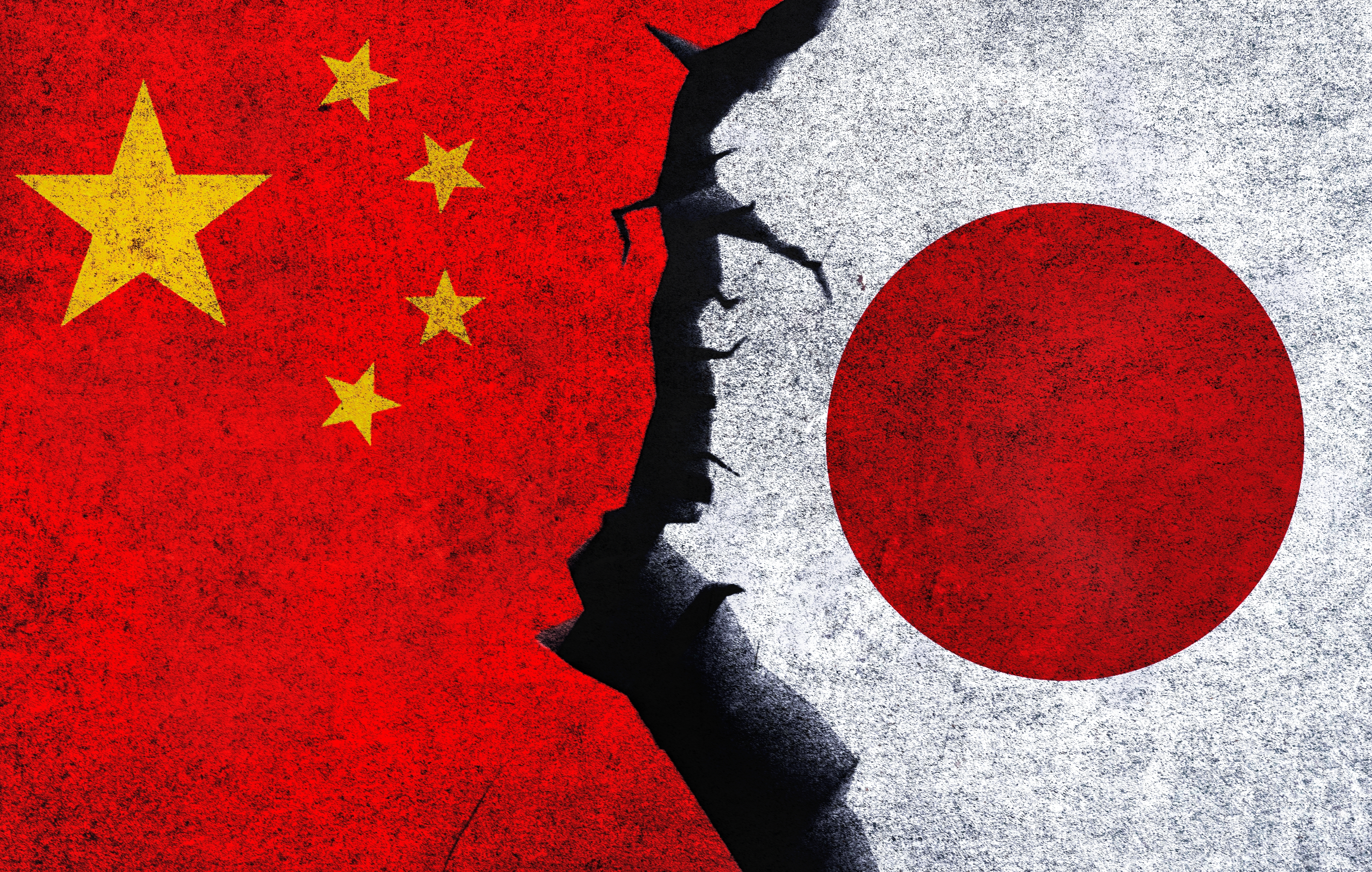

Tokyo/Beijing — Diplomatic and military friction between China and Japan has intensified significantly this week, marked by a maritime confrontation over disputed islands, the high-profile closure of a major Japanese factory in China and urgent diplomatic maneuvering involving France and South Korea.
Maritime Clash in the East China Sea
On Tuesday, December 2, 2025, the coast guards of China and Japan engaged in a tense standoff near the Senkaku Islands (known as the Diaoyu Islands in China). According to reports, Chinese Coast Guard vessels approached a Japanese fishing boat operating in the waters surrounding the uninhabited chain. The China Coast Guard stated it had taken “necessary control measures” to expel the fishing vessel, which it claimed had illegally entered Chinese territorial waters. Conversely, the Japan Coast Guard reported that it had intercepted the Chinese ships to protect the fishing boat, ensuring its safety until the Chinese vessels departed hours later.
According to reports, Chinese Coast Guard vessels approached a Japanese fishing boat operating in the waters surrounding the uninhabited chain. The China Coast Guard stated it had taken “necessary control measures” to expel the fishing vessel, which it claimed had illegally entered Chinese territorial waters. Conversely, the Japan Coast Guard reported that it had intercepted the Chinese ships to protect the fishing boat, ensuring its safety until the Chinese vessels departed hours later.
This maritime encounter follows weeks of deteriorating relations triggered by Japanese Prime Minister Sanae Takaichi’s remarks in November. Takaichi stated that a Chinese attack on Taiwan could constitute an “existential crisis” for Japan, potentially necessitating a military response — a stance that Beijing has condemned as a violation of its sovereignty.
Economic Fallout: Canon Exits Zhongshan
The diplomatic strain appears to be spilling over into the economic sphere. Canon, the Japanese imaging giant, has permanently closed its printer manufacturing plant in Zhongshan, Guangdong province. The facility, which had operated for 24 years and employed approximately 1.600 workers, ceased operations on November 28.
While Canon officially cited “years of mounting cost pressures and rapidly shifting market conditions” as the reason for the closure, the timing has drawn widespread scrutiny. Analysts and regional media suggest the move is part of a broader “decoupling” trend, with Japanese firms retreating from the mainland amidst the growing geopolitical hostility. The factory’s closure serves as a potent symbol of the fraying economic ties between Asia’s two largest economies, which have long relied on deep trade integration despite political differences.
Diplomatic Maneuvering and Mediation Offers
As tensions mount, both nations are seeking international support. Beijing has reached out to Paris to bolster its diplomatic position. In a call with French President Emmanuel Macron’s diplomatic adviser, Emmanuel Bonne, top Chinese diplomat Wang Yi urged France to “firmly support” China’s position on core interests, specifically the One-China policy, in the face of the feud with Japan.
Meanwhile, South Korea has stepped forward as a potential mediator. On December 3, during a press conference in Seoul marking the first anniversary of the “12.3 Martial Law incident,” South Korean President Lee Jae-myung offered to play a bridging role.
“If we take sides, it will only serve to escalate tensions,” President Lee stated, citing a Korean proverb about stopping fights and encouraging negotiation. He emphasised that whether in personal or international relationships, “coexistence, mutual respect and cooperation” should be the priority. Lee pledged to seek a path where all parties can coexist, offering to minimise conflict and mediate where possible rather than aligning strictly with one neighbour against the other.
Outlook
With the Japanese government maintaining that its position on regional security remains unchanged, and China refusing to back down on its territorial claims, the situation remains volatile. The combination of military posturing at sea and corporate withdrawals on land suggests that the Sino-Japanese relationship is entering a precarious new phase, with regional neighbours watching closely for further escalation.
Observing the China-Japan relationship, it is important to note that Japan just recently hardened its stance against China after Prime Minister Sanae Takaichi assumed office. This could be part of Japan’s new course to reintegrate it into the regional power mix. Naturally, the focus falls directly onto China, the region’s most expansive actor. Japan’s strategy does open another flank for China, which is already trying to contain other actors’ moves against it. Notably, Australia conducts further ally-building in the region.
Japan’s recent intensification of its foreign policy assertiveness could be a coordinated effort with its European and neo-European allies to contain China. In turn, China will have to find a way to navigate through the mounting international pressures or change towards a more conformative approach in its foreign policy.